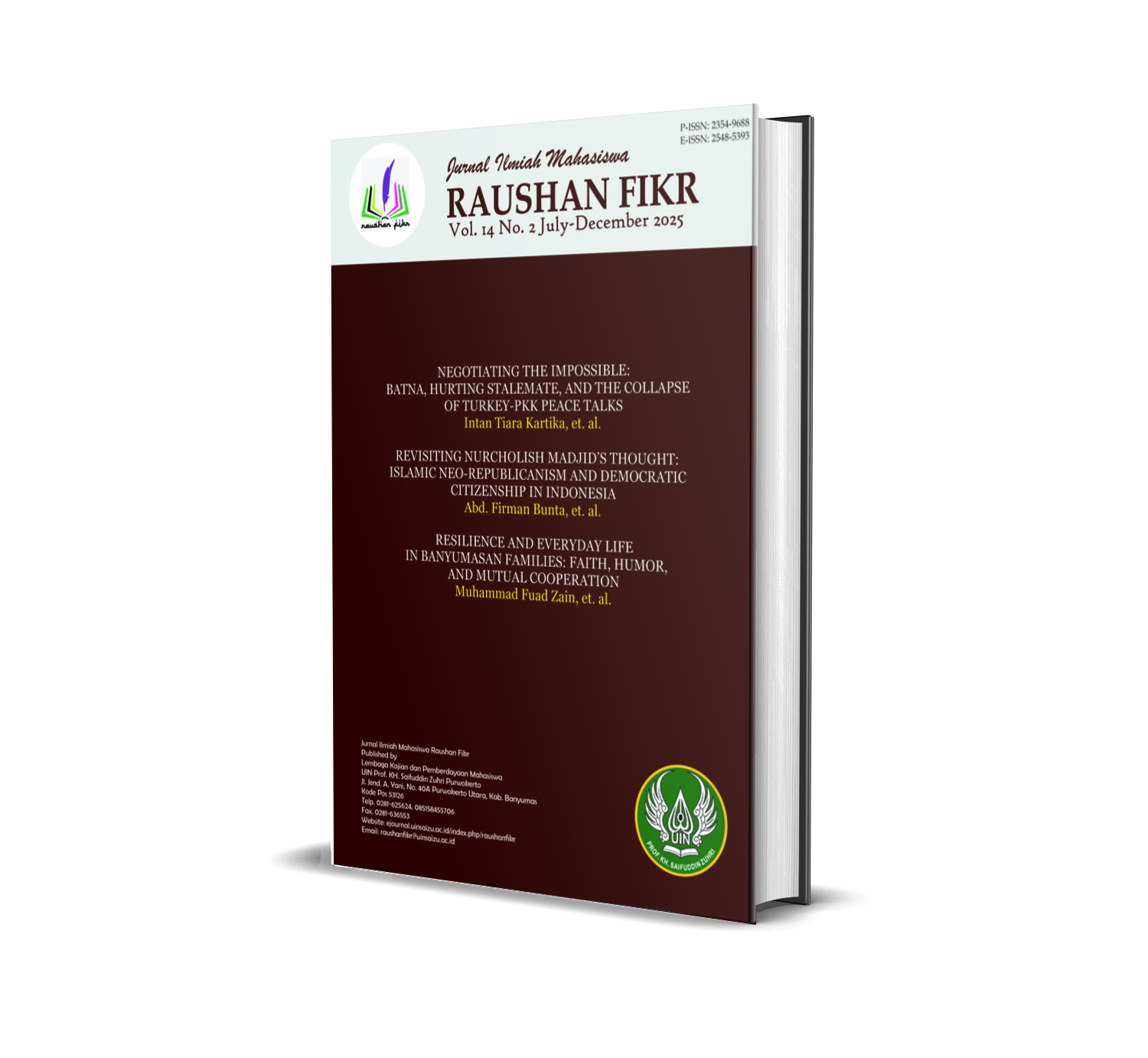
Resilience and Everyday Life in Banyumasan Families: Faith, Humor, and Mutual Cooperation
DOI:
https://doi.org/10.24090/jimrf.v14i2.15230Keywords:
Banyumasan, Family Resilience, Socio-Cultural, Ngapak, Walsh Framework, Double ABC-XAbstract
This study explores family resilience in the Banyumasan community through a socio-cultural perspective, drawing on Walsh’s Family Resilience Framework, the Double ABC-X Model, and Bronfenbrenner’s ecological systems theory. Employing a qualitative approach with interviews, participant observation, and documentation, data were collected from twelve households across peri-urban, highland, and lowland contexts, alongside community leaders, religious figures, and women’s group activists. The findings show that resilience is anchored in gotong royong (mutual cooperation), egalitarian interaction, and the cultural symbolism of the Ngapak dialect. Belief systems shaped by Islamic faith and Banyumasan pragmatism facilitate meaning-making, while kinship-based networks and neighbourly solidarity sustain economic and social survival. Direct, humorous communication reduces ambiguity and enhances collective problem-solving. Livelihood diversification strengthens economic security, whereas migration simultaneously improves material welfare and strains relational and educational dimensions. By linking these dynamics to national policy indicators, the study demonstrates that Banyumasan families exemplify resilience processes that are both culturally distinctive and policy-relevant, offering insights for culturally grounded and migration-sensitive interventions.Downloads
References
Admin. (2024). Al Irsyad Al Islamiyyah Purwokerto. Al-Irsyad. https://alirsyadpwt.or.id/profil/
Ahdiati, T. (2020). Kearifan lokal dan pengembangan identitas untuk promosi wisata budaya di Kabupaten Banyumas. Jurnal Pariwisata Terapan, 4(1), 25–34.
Alkire, S., & Foster, J. (2011). Understandings and misunderstandings of multidimensional poverty measurement. The Journal of Economic Inequality, 9, 289–314.
Amalia, R. M., Akbar, M. Y. A., & Syariful, S. (2018). Ketahanan Keluarga dan Kontribusinya Bagi Penanggulangan Faktor Terjadinya Perceraian. Jurnal Al-Azhar Indonesia Seri Humaniora, 4(2), 129–135.
Annur, C. M. (2022). Angka Kemiskinan Indonesia Maret 2022 Terendah Semenjak Pandemi. Databooks. https://databoks.katadata.co.id/datapublish/2022/07/21/angka-kemiskinan-indonesia-maret-2022-terendah-semenjak-pandemi
Ansoms, A. (2013). Negotiating on poverty: A participatory poverty assessment simulation game. Simulation & Gaming, 44(4), 586–601.
Apriliani, F. T., & Nurwati, N. (2020). The Effect of Young Marriage on Family Resilience. Proceedings of Research & Community Service, 7(1), 90–99.
Atika, Z. R., Rokhman, A., & Faozanuddin, M. (2018). Pengukuran Kemiskinan di Kabupaten Banyumas. JUSS (Jurnal Sosial Soedirman), 2(1).
Aziz, S. (2015). Pendidikan Keluarga: Konsep dan Strategi. Gava Media.
Badan Pusat Statistik. (2016). Pembangunan Ketahanan Keluarga 2016. Kementerian Pemberdayaan Perempuan dan Perlindungan Anak.
BPS Banyumas. (2022). Kabupaten Banyumas Dalam Angka 2022 (Banyumas Regency in Figures). Prima Puspa Sari.
Cárthaigh, S. Mac. (2014). Need and poverty. Policy & Politics, 42(3), 459–473.
Darmastuti, R. (2013). Mindfullness dalam komunikasi antarbudaya pada kehidupan masyarakat Samin dan masyarakat Rote Ndao, NTT. Buku Litera.
De Decker, P., & Dewilde, C. (2010). Home-ownership and asset-based welfare: the case of Belgium. Journal of Housing and the Built Environment, 25, 243–262.
Dede et al. Burhanudin. (2022). Islamisasi Jawa Tengah bagian Barat-Selatan. Litbang Diklat Press.
Dian. (2019). PDI-P Kuasai 22 Kecamatan. Suara Banyumas. http://suarabanyumas.com/pdi-p-kuasai-22-kecamatan/
Diduch, A. M. (2012). Using the consumer expenditure survey to teach poverty measurement. The Journal of Economic Education, 43(1), 99–106.
Diener, E. (2009). Assessing well-being: The collected works of Ed Diener (Vol. 39). Springer Science & Business Media.
Dutta, S., & Kumar, L. (2013). Poverty Dynamics in Rural India: An Asset-Based Approach. Margin: The Journal of Applied Economic Research, 7(4), 475–506.
Filmer, D., & Scott, K. (2012). Assessing asset indices. Demography, 49(1), 359–392.
Geertz, C. (1973). The interpretation of cultures (Vol. 5019). Basic books.
Herusatoto, H. B. (2008). Banyumas; Sejarah, Budaya, Bahasa, Dan Watak. LKIS PELANGI AKSARA.
Hidayat, A. A. (2006). Filsafat Bahasa: Mengungkap hakikat bahasa, makna dan Tanda. PT Remaja Rosdakarya.
Huang, J., Jin, M., Deng, S., Guo, B., Zou, L., & Sherraden, M. (2013). Asset poverty in urban China: A study using the 2002 Chinese household income project. Journal of Social Policy, 42(4), 763–781.
UU No. 10 Tahun 1992, (1992).
Iqbal, M. (2017). Psikologi Ketahanan Keluarga. Buletin KPIN.
Jirzanah, J. (2008). Aktualisasi Pemahaman Nilai Menurut Max Scheler Bagi Masa Depan Bangsa Indonesia. Jurnal Filsafat, 18(1), 93–114.
Kusnandar, V. B. (2021). 10 Provinsi dengan Angka Stunting Tertinggi Nasional Tahun 2021. Databooks. https://databoks.katadata.co.id/datapublish/2022/07/12/10-provinsi-dengan-angka-stunting-tertinggi-nasional-tahun-2021
Misturelli, F., & Heffernan, C. (2010). The concept of poverty: a synchronic perspective. Progress in Development Studies, 10(1), 35–58.
Murdiyastomo, A. H. (2010). Etos Kerja: Keteladanan Masyarakat Banyumas Awal Abad XX. Mozaik, 1, 55–67.
Musfiroh, M., Mulyani, S., Cahyanto, E. B., Nugraheni, A., & Sumiyarsi, I. (2019). Analisis Faktor-Faktor Ketahanan Keluarga Di Kampung Kb Rw 18 Kelurahan Kadipiro Kota Surakarta. PLACENTUM: Jurnal Ilmiah Kesehatan Dan Aplikasinya, 7(2), 61–66.
Pawestri, A. G., Thanissaro, P. N., Kulupana, S., Istiani, A. N., Widhiyatmoko, Y. Y., Raden, U., & Lampung, I. (2020). Membangun Identitas budaya banyumasan melalui dialek ngapak di media sosial. Jurnal Pendidikan Bahasa Dan Sastra, 19(2), 255–266.
Permendagri No. 72 Tahun 2019, (2019).
Priyadi, S. (2008). Orientasi Nilai Budaya Banyumas: Antara Masyarakat Tradisional dan Modern. Humaniora, 20(2), 158–167.
Purwanto, P. (2015). Ekspresi Egaliter, Motif Batik Banyumas. Imajinasi: Jurnal Seni, 9(1), 13–24.
Rustina, R. (2014). Keluarga dalam Kajian Sosiologi. Jurnal Musawa IAIN Palu, 6(2), 287–322.
Suhardi, I. (2013). Budaya Banyumasan Tak Sekadar Dialek (Representasi Budaya Banyumas Dalam Prosa Karya Ahmad Tohari). Jurnal Elektronik Wacana Etnik, 4(1), 37–46.
Suharto. (2023). Interview with Kades Cingebul Regarding Village Community Employment.
Sunarti, E., Syarief, H., Megawangi, R., & Saepudin, A. (2003). Perumusan Ukuran Ketahanan Keluarga.
Supriyanto, S. (2023). Cowongan in Javanese Islamic mysticism: A study of Islamic philosophy in Penginyongan society. HTS Teologiese Studies/Theological Studies, 79(1).
Suroyo, S., Bonita Padang, Fito Dwi Rezky Ramadhan, Januardi, J., Monica Ramadhani C, Patricia Endah S. Riski Saputra, Rosi Octariantoni, Sri Supitri Romdania, Winda Febiola, & Yossy Shinta Dewi. (2022). Pacu Jalur Dan Kekeluargaan Masyarakat Desa Pulau Kalimanting. J-ABDI: Jurnal Pengabdian Kepada Masyarakat, 2(5 SE-Articles), 4781–4794. https://doi.org/10.53625/jabdi.v2i5.3522
Tarwiyah, S. (2023a). Interview Related to Violence at UPTD PPA Banyumas Regency.
Tarwiyah, S. (2023b). Recapitulation of Data on Handling Cases of Gender-Based Violence and Children in Banyumas Regency in 2022.
Udoyono, B. (2019). Membangun Keluarga Bahagia dengan Iman, Cinta, dan Wacana. Elex media komputindo.
Widyaningsih, R. (2014). Bahasa Ngapak dan Mentalitas Orang Banyumas: Tinjauan dari Perspektif Filsafat Bahasa Hans-Georg Gadamer. Jurnal Ultima Humaniora, 2(2), 186–200.
Wijayanti, U. T. (2021). Analisis Faktor Penyebab Perceraian pada Masa Pandemi Covid-19 di Kabupaten Banyumas. Jurnal Ilmu Keluarga Dan Konsumen, 14(1), 14–26. https://doi.org/10.24156/jikk.2021.14.1.14
Wiratri, A. (2018). Menilik ulang arti keluarga pada masyarakat Indonesia. Jurnal Kependudukan Indonesia, 13(1), 15–26.
Yunianto, D. (2020). Ketahanan Keluarga Sebagai Basis Pendidikan Di Tengah Pandemi Covid 19. TA’DIBUNA: Jurnal Pendidikan Agama Islam, 3(1), 1–12
Downloads
Published
How to Cite
Issue
Section
License
Copyright (c) 2025 Muhammad Fuad Zain, Syifaun Nada, M. Yudha Ditta Wiratama

This work is licensed under a Creative Commons Attribution-NonCommercial-ShareAlike 4.0 International License.
Authors who publish with this journal agree to the following terms:
- Authors retain copyright and grant the journal right of first publication with the work simultaneously licensed under a Creative Commons Attribution-NonCommercial-ShareAlike 4.0 International License that allows others to share the work with an acknowledgement of the work's authorship and initial publication in this journal.
- Authors are able to enter into separate, additional contractual arrangements for the non-exclusive distribution of the journal's published version of the work (e.g., post it to an institutional repository or publish it in a book), with an acknowledgement of its initial publication in this journal.
- Authors are permitted and encouraged to post their work online (e.g., in institutional repositories or on their website) prior to and during the submission process, as it can lead to productive exchanges, as well as earlier and greater citation of published work (See The Effect of Open Access).