KONSEP BIOPHILIC DESIGN DALAM ARSITEKTUR KONTEMPORER: TINJAUAN TEORETIS
DOI:
https://doi.org/10.24090/vastutara.v1i2.13843Keywords:
biophilic design, contemporary architectureAbstract
The development of contemporary architecture presents challenges to environmental sustainability and human psychological needs for connection with nature. The concept of biophilic design emerged as a response to these conditions, by integrating natural elements into the built environment to improve the well-being and comfort of users. This study aims to review and reformulate the concept of biophilic design in contemporary architecture through theoretical studies, emphasizing the importance of integrating the basic principles of biophilia that are in-depth, cross-disciplinary, and relevant to the modern urban context. The method used is a literature study through analysis of literature from various relevant sources, including journals, books, and architectural case studies. The results of the study show that the application of biophilic design principles, such as the use of natural light, vegetation, cross-ventilation, and natural forms, can improve the quality of space and have a positive impact on the psychology and productivity of occupants. By integrating biophilia principles into modern building design, biophilic design not only contributes to aesthetics, but also to the sustainability and health of the built environment.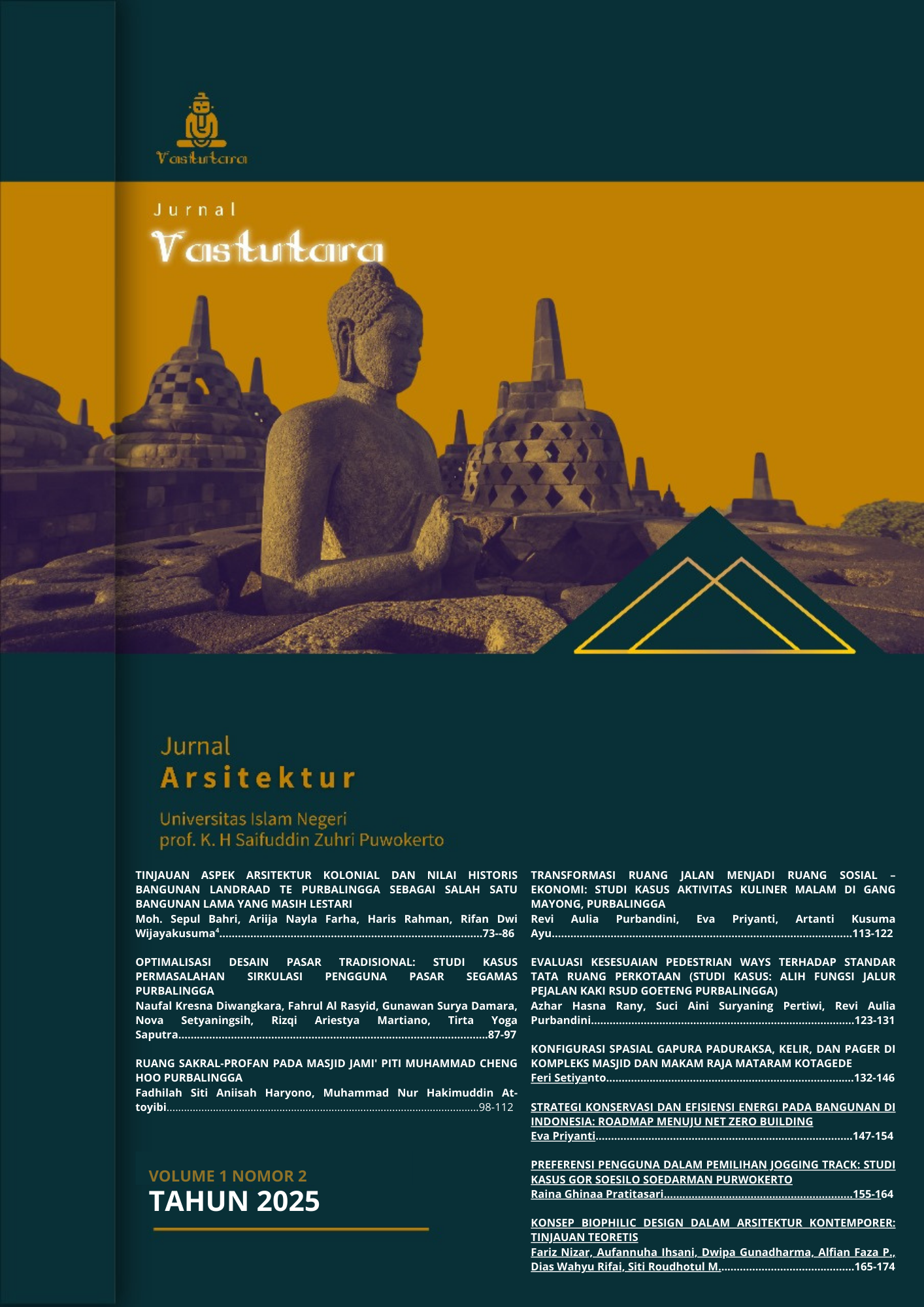
Downloads
Published
2025-12-04
Issue
Section
Articles
License
Copyright (c) 2025 Fariz Nizar, Aufannuha Ihsani, Dwipa Gunadharma, Alfian Faza P., Dias Wahyu Rifai, Siti Roudhotul M.

This work is licensed under a Creative Commons Attribution-NonCommercial-ShareAlike 4.0 International License.
You are free to:
- Share — copy and redistribute the material in any medium or format for any purpose, even commercially.
- Adapt — remix, transform, and build upon the material for any purpose, even commercially.
- The licensor cannot revoke these freedoms as long as you follow the license terms.
Under the following terms:
- Attribution — You must give appropriate credit, provide a link to the license, and indicate if changes were made. You may do so in any reasonable manner, but not in any way that suggests the licensor endorses you or your use.
- ShareAlike — If you remix, transform, or build upon the material, you must distribute your contributions under the same license as the original.
- No additional restrictions — You may not apply legal terms or technological measures that legally restrict others from doing anything the license permits.
Notices:
You do not have to comply with the license for elements of the material in the public domain or where your use is permitted by an applicable exception or limitation.
No warranties are given. The license may not give you all of the permissions necessary for your intended use. For example, other rights such as publicity, privacy, or moral rights may limit how you use the material.